Laundry Energy Scales & Water Liters
The modern laundry energy label eliminates arbitrary annual assumptions in favor of a strictly reproducible 100-cycle standardized metric centered around the harmonized "Eco 40-60" test framework.
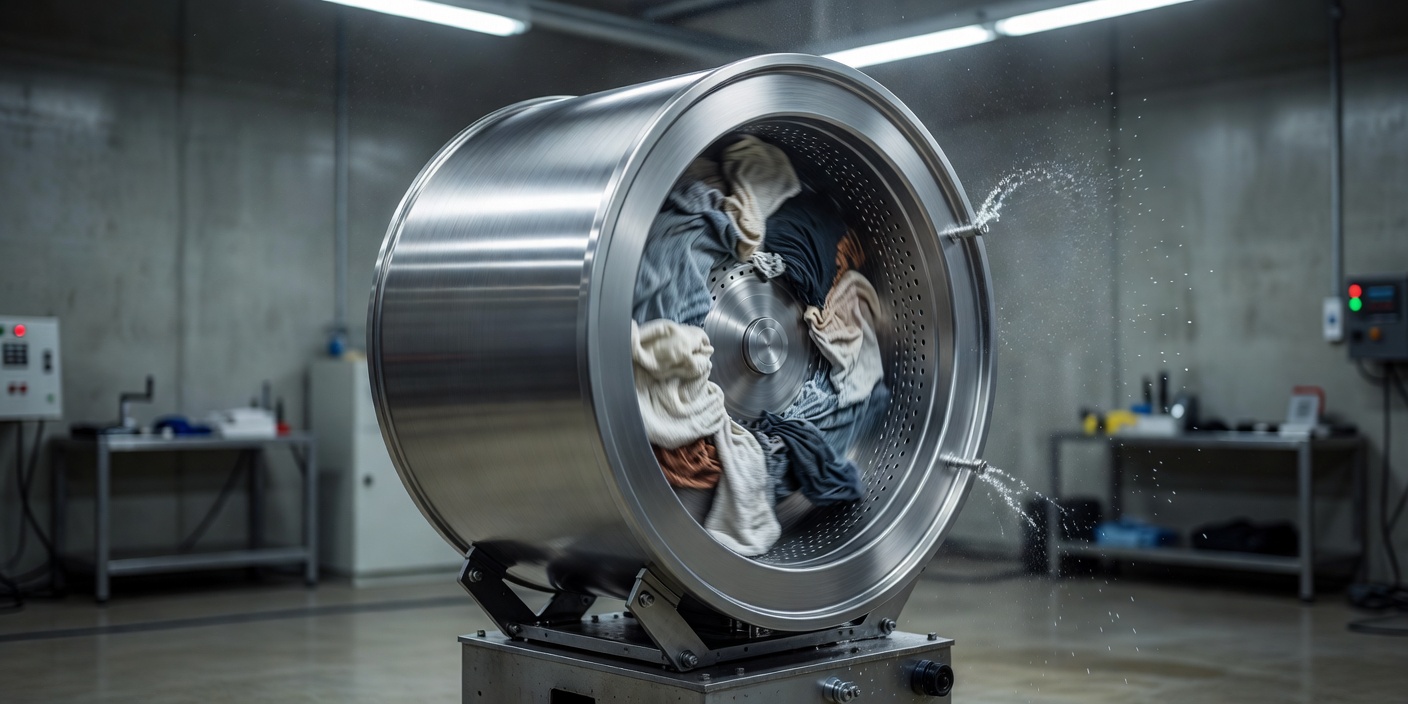 CENTRIFUGAL EXTRACTION AUDIT
1. Deconstructing the "Eco 40-60" Program Requirement
Every rated washing machine sold under modern regulatory standards must feature a default program labeled "Eco 40-60". By legislative definition, this program cleans normally soiled cotton laundry declared to be washable at 40°C or 60°C in the same wash cycle.
Crucially, the machine does not necessarily heat water to 60°C. By leveraging enzyme-optimized detergents and prolonging drum tumbling duration to 3 hours or more, the internal bath temperature may peak at merely 38°C to 43°C. The energy label's kWh consumption reflects this exact program run under a weighted mix of full load, half load, and quarter load conditions.
2. The Spin Drying Efficiency Class (A through G)
While consumers frequently fixate on the primary energy tier, the spin efficiency rating directly determines the operating cost of subsequent tumble drying. Residual moisture content (RMC) is categorized into distinct bands:
- Class A: Residual moisture < 45% (typically achieved at 1600 RPM).
- Class B: Residual moisture 45% to 53% (standard 1400 RPM spin).
- Class C: Residual moisture 54% to 62% (common 1200 RPM units).
- Class D: Residual moisture 63% to 71% (entry-level 1000 RPM machines).
Extracting water mechanically through high-speed centrifugal force consumes less than 2% of the electricity required to evaporate that same moisture thermally inside a heated dryer drum.
3. Dual-Label Architecture for Washer-Dryer Combos
Combined washer-dryer units carry a distinctive split energy label featuring two distinct energy efficiency scales side-by-side. The left side charts the full "wash and dry" cycle, while the right side tracks the "wash only" cycle.
A machine that scores a respectable Class B for washing frequently tumbles down to Class E when running the drying cycle. This dramatic divergence occurs because condenser drying requires continuous thermal heating and, in older designs, uses cold tap water to condense steam, consuming an astonishing 80 to 110 liters of water simply to dry clothes.
4. Decibel Ratings During Centrifugal Spin
Modern laundry labels specify acoustic sound emissions specifically for the spin phase, as this represents peak mechanical stress. A machine rated at 72 dB(A) produces less than half the subjective acoustic annoyance of a 78 dB(A) machine. Direct-drive brushless permanent-magnet motors eliminate belt drive resonance, delivering significantly quieter cycle acoustics.