Dishwasher Eco Modes & Cycle Draw
Modern dishwashers challenge consumer intuition: running a cycle for 3 hours and 45 minutes consumes substantially less energy than an aggressive 45-minute rapid wash.
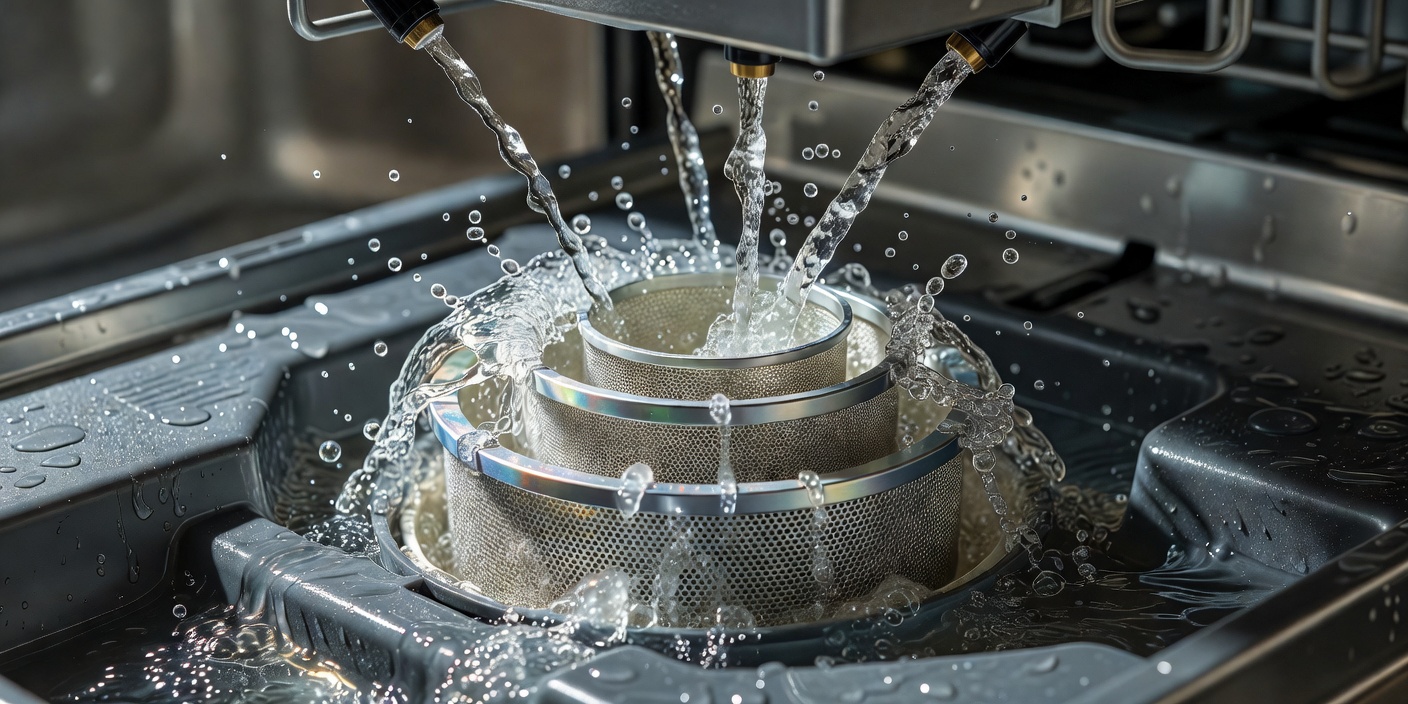 CLOSED-LOOP HYDRAULICS
1. Why the "Eco Program" Takes So Long
Thermal energy (heating water with a resistive heating element) requires orders of magnitude more kilowatt-hours than the electric motor spinning the wash arms. To achieve an A or B efficiency tier, engineers replace intense heat (65°C to 70°C) with prolonged chemical action at lower temperatures (50°C).
By extending the soak and recirculation duration, proprietary detergent enzymes have sufficient dwell time to break down starches and proteins. The label's cycle duration pictogram (expressed in hours and minutes) alerts users to the operational tempo required to achieve the advertised efficiency.
2. Place Settings vs. Energy Density
Dishwasher energy labels scale according to standardized place setting capacity (typically 12, 14, or 16 place settings for standard 60cm wide units; 9 to 10 for slimline 45cm models). A single place setting is rigorously defined by international standard EN 60436, encompassing dinner plates, soup bowls, glasses, cutlery, and serving vessels.
An appliance that cleans 14 place settings using 64 kWh per 100 cycles demonstrates superior energy density (4.57 kWh per place setting per 100 cycles) compared to an older 12-setting machine using 75 kWh (6.25 kWh per place setting).
3. Zeolite Mineral Drying vs. Auto-Door Release
Traditional electric coil drying wastes significant power heating air to evaporate moisture. Advanced Class A dishwashers employ innovative natural drying mechanisms:
- Zeolite / Mineral Adsorption: Natural aluminosilicate minerals absorb ambient humidity during the drying phase, releasing intense dry exothermic heat back into the wash tub without electric coils.
- Auto-Opening Mechanical Latches: The door automatically pops open by 10 to 15 centimeters at cycle completion, releasing humid vapor into the kitchen air to dry dishes via natural ambient airflow.
4. Hot Water Intake Hookups: When Does It Make Sense?
Many modern dishwashers can be connected directly to a domestic hot water supply (up to 60°C). If your home heats water via rooftop solar thermal panels or a high-efficiency heat pump water heater, feeding preheated water directly into the dishwasher bypasses the internal resistive element, lowering cycle electrical consumption by up to 60%.